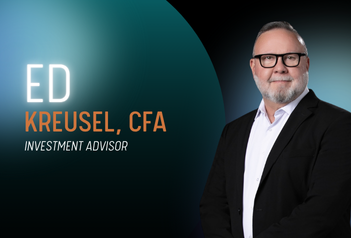
Written By
John B. Rowsell, PhD, Partner | Chief Investment Officer
and Amaury de Barros Conti, Partner | Vice President Investments
Recent Headlines: Private Credit
Recent media coverage has focused on growing stress within certain segments of the private credit market, highlighted by developments at Blue Owl Capital, Cliffwater, and Morgan Stanley. After years of rapid asset growth, these firms have recently restricted or limited investor withdrawals in select private credit vehicles as redemption requests rose meaningfully. Blue Owl began selling assets and curtailing liquidity in one of its retail‑oriented private credit funds, while both Cliffwater and Morgan Stanley capped redemptions after investor demand to exit exceeded the liquidity available under fund terms—renewing broader scrutiny around liquidity, valuation transparency, and structural design in certain retail‑accessible private credit strategies.
Private credit is now a $2+ trillion market, having evolved significantly since its origins in the 1990s, when it primarily focused on lending to distressed borrowers. Following the Global Financial Crisis, regulatory pressure pushed banks to reduce balance‑sheet lending, creating an opportunity for private credit managers to step in as an alternative source of financing. At the same time, private equity activity expanded rapidly, supported by low interest rates that made leveraged buyouts easier to underwrite. In this structure, private equity firms provided equity capital while private credit supplied much of the leverage.
Over time, private credit expanded well beyond smaller, underserved borrowers. Today, these strategies increasingly finance large, complex transactions, including loans tied to software companies, artificial intelligence infrastructure, and data centers—often at valuations that assume continued growth and stable capital markets. Software and SaaS businesses became major targets for private equity given their strong cash flows but limited tangible assets. As exit markets slowed, many of these companies remained private longer than expected, leaving private credit lenders potentially exposed to duration risk with limited collateral support.
Compounding these challenges has been the rapid growth of retail‑accessible private credit vehicles, including interval funds, BDCs, and RIC structures. It is estimated that a significant portion of the private credit market now sits in these vehicles. While they offer periodic liquidity on paper, the underlying loans are long‑dated and infrequently traded, creating a potential structural mismatch between asset duration and investor expectations. During periods of market stress or elevated redemptions, this mismatch can surface quickly.
The Risk of Chasing “Yield” Without Context
A key lesson from recent events is the danger of focusing on headline yield without understanding the broader interest‑rate environment and the liquidity profile of the investment. In today’s higher‑rate world, attractive yields are no longer scarce. High‑quality bonds, Treasury securities, and money market instruments offer meaningful income with daily liquidity and transparent pricing.
When a strategy consistently advertises yields well in excess of those alternatives, investors should ask what risks they are being compensated for—particularly around credit quality, leverage, valuation assumptions, and access to capital. Yield alone does not reflect the full risk profile.
Many retail‑oriented private credit and interval funds promote periodic liquidity features, but these provisions are conditional. In volatile markets, managers may legally gate withdrawals, delay tenders, or return capital unevenly. This can create a disconnect between what investors believe they own—an income‑producing investment with regular access—and what they actually hold: illiquid, long‑term loans that may only be sold at discounts in certain stressed environments.
Liquidity Matters More Than It Appears
Liquidity risk often remains invisible until it matters most. In calm markets, low redemption activity can mask structural issues. During periods of uncertainty, however, the combination of retail investor behavior and illiquid assets can force difficult decisions, including asset sales, withdrawal restrictions, or valuation scrutiny.
These dynamics are not inherently catastrophic, but they are incompatible with portfolios that require predictability, flexibility, or near‑term access to capital. Even investors without direct private credit exposure can feel second‑order effects through broader credit spread widening, which can impact related fixed income and credit‑sensitive strategies.
Sendero’s Approach
At Sendero, we have intentionally avoided direct investments in private credit, particularly retail‑oriented vehicles with constrained liquidity. Our focus has been on strategies where we believe the pricing transparency, liquidity, and structural alignment better reflect client objectives.
That said, some strategies we utilize may still be sensitive to broader credit conditions. For example:
- Certain special situations strategies seek to capitalize on dislocations when borrowers experience stress.
- Other credit‑oriented managers invest across the capital structure, often favoring publicly traded bonds rather than private loans.
- Syndicated bank loan exposure, while similar in economic purpose, differs meaningfully in structure: loans are originated by banks, actively syndicated, marked to market daily, and generally offer daily liquidity.
These distinctions matter. While credit-spread widening can affect performance across multiple strategies, we are cautious about approaches that rely heavily on illiquid structures or optimistic assumptions to deliver income.
Sendero will utilize the interval fund approach when we think it makes sense relative to the underlying investment strategy. The challenges we have observed with the interval fund approach often derive from Investment managers focusing on asset growth first, and secondly, applying the structure to underlying assets that lack liquidity and robust transparency in pricing. These factors may be compounded when advisors do not properly educate investors on the potential limitations of the interval fund structure.
Our investment process emphasizes due diligence, transparency, and alignment with client needs, not headline yields. We believe income should be earned thoughtfully, with a clear understanding of risks, and we avoid strategies where liquidity and clarity are sacrificed in pursuit of incremental return.
Disclaimer: This material is provided for informational purposes only and should not be construed as investment, legal, or tax advice. Sendero Wealth Management, LLC is an SEC-registered adviser; registration does not imply skill. Views are as of the date noted, may change without notice, and forward-looking statements are not guarantees of future results. References to market events, asset classes, or investment strategies are general in nature and do not constitute a recommendation or solicitation. Any discussion of private credit, interval funds, or alternative investments is for educational purposes only. Such investments may involve heightened risks, including illiquidity, valuation uncertainty, leverage, and limited transparency. Data from third-party sources is believed to be reliable but is not guaranteed; indices are unmanaged and not available for direct investment. Past performance is not indicative of future results. All investments involve risk, including possible loss of principal. Consult your professional advisers regarding your specific circumstances. For additional information about Sendero, please review our Form ADV & Form CRS at www.sendero.com.